



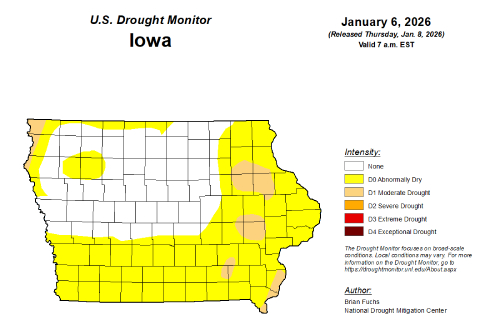
DES MOINES – Drought conditions improved in the summer months across the state but then degraded again with a dry fall, according to the latest Water Summary Update.
Iowa ended the year with a statewide average total of 33.60 inches of precipitation, or 1.95 inches below normal. December’s preliminary statewide precipitation was 1.00 inches, or 0.37 inches below normal. The wettest conditions occurred in the southeast this month, bringing some relief to the area.
In 2024, Iowa finally ended a historically lengthy drought, but rainfall deficits remained into the new year. The early months of 2025 were marked by drought and dryness due to these deficits and below-normal rainfall. However, the summer months saw additional wet weather, resulting in drought-free conditions across the state throughout much of the summer and early fall. However, dry conditions returned in the fall, resulting in two drought regions being placed under a drought watch.
Statewide temperatures for the year were just under a degree and a half warmer than normal. The U.S. Drought Monitor (USDM) shows that by the end of 2025, some areas of Iowa had slipped back into abnormally dry conditions or drought conditions, mostly in northwest and eastern Iowa.
“The dry start to 2025 subsided after the state experienced above-average rainfall during the summer. Initial concerns about drought expansion eased, leading to the removal of the Iowa Drought Plan Drought Watch designation statewide for a total of five months of the year. However, dry conditions returned in the fall. The state saw below-average rainfall for 2025, but National Weather Service outlooks are stable. Continued normal or above normal precipitation in January and February is important to maintain average conditions in the typically dry winter months,” said Jessica Reese McIntyre, DNR Environmental Specialist.
For a thorough review of Iowa’s water resource trends, visit

